

Cloud Forest Reserve & Western Andes Birding: The Complete Guide to the Best Birding Lodges.

Colombia is not merely a great birding destination — it is the birding destination. Home to more than 1,954 bird species, the highest number recorded worldwide, the country also counts approximately 82 endemic species and over 150 migratory species. That figure is not static. Colombia clinched the top spot in the Global Big Day with 1,558 bird species recorded, leading the worldwide birdwatching event. Therefore, if you're planning a birding trip and haven't put Colombia at the top of your list, you're leaving a once-in-a-lifetime opportunity on the table.
At the beating heart of this avian paradise lies the Western Andes — a dramatic mosaic of cloud forest reserves, misty montane corridors, and Chocó-influenced rainforests that delivers some of the most extraordinary birdwatching on the planet. A sixth of the world's biodiversity — 2 million species of plants, animals, fungi and microorganisms — can be found in the region's cloud forests. Choosing the right ecolodge in this ecosystem is the single most important decision you'll make for your trip. The right base transforms a good birding vacation into an unforgettable wildlife immersion.
This guide breaks down the best birding lodges in Colombia with a focus on the cloud forest reserves of the Western Andes — including a spotlight on Yotoco Lodge, a remarkable ecolodge positioned in one of the most strategically important cloud forest fragments in the country. Whether you're a seasoned lifer-chaser or picking up your binoculars for the first time, this framework will help you find your perfect base.

Key Takeaways
-
Colombia is the world's #1 birding country: The country has nearly 20 percent of the world's total avian species, including 200 migratory species, 87 threatened birds, and 78 endemics. If your life list is a priority, no country offers a faster return on investment — therefore plan a minimum of 7–10 days in-country to do the Western Andes justice.
-
The Western Andes cloud forest is irreplaceable: The cloud forest ecoregion of the Colombian Andes is arguably the most biodiverse in the world. A moist climate, varying altitudes, and high rates of endemism create idyllic conditions for life. However, in Colombia, one of the countries with the greatest cloud forest area, only 10–20% of the original cover is estimated to remain. This means lodges embedded within or adjacent to protected reserves — like Yotoco Lodge — actively contribute to conservation simply by keeping those forests economically valuable.
-
Location relative to a reserve matters more than luxury tier: Infrastructure is very important. It is necessary the presence of observation towers, canopy roads, and well-demarcated trails with good viewing angles and easy access. This is what defines a specialized lodge for birders. Therefore, prioritize proximity to protected habitat over amenity checklists.
-
Birdwatching is a serious economic driver: Colombia's birdwatching industry is a multi-million dollar sector, with the country recently passing legislation to promote ecotourism as a sustainable development strategy, officially naming Colombia "The country of the birds." When you stay at a conservation-minded ecolodge, your dollars directly fund habitat protection.
-
Tourism to Colombia is surging: As the perception of safety has changed, foreign visitors have begun pouring into Colombia with tourism growing an astounding 1200% between 2000 and 2024. This means top birding lodges fill up fast — book 3–6 months ahead for peak season (December–February and June–August).
Quick-Start Prioritization Framework
Use this table to match your birding style with the right strategy for your Western Andes trip.
|
Strategy |
Best For |
Effort Level |
Time to Results |
|---|---|---|---|
|
Stay in a cloud forest reserve ecolodge (e.g., Yotoco Lodge) |
All birders, first-timers |
Low |
Immediate — birds at feeders on arrival |
|
Self-drive Western Andes circuit (Pacific → Western Andes → Buga) |
Experienced, flexible travelers |
High |
7–14 days |
|
Guided multi-lodge tour (Yotoco Lodge + Hotel la Huerta + Ecohotel El Diamante) |
Serious listers, endemic chasers |
Medium |
10–14 days |
|
Day-trips birding from Cali (Km 18, Anchicayá Valley, San Ciprano, Atuncela, Rio Bravo) |
Time-limited visitors |
Low |
1–7 days |
|
High-Andes páramo extension close to Buga(San José - La Aurora) |
Advanced birders |
High |
2–3 days add-on |
Start here if you're:
-
A first-time visitor to Colombia: Base yourself at a lodge within or adjacent to a cloud forest reserve — Yotoco Lodge sits near the San Antonio Forest at Km 18, one of the most strategically located protected cloud forest fragments in Valle del Cauca, placing you within walking distance of endemic species.
-
A serious endemic chaser: Combine Yotoco/Araucana (Western Andes) with Buga and it's Central Andes High andean Forest (San José and La Aurora) for the highest endemic density corridor in Colombia.
-
Traveling as a family or non-birder group: Choose a lodge with diversified activities — farm-to-table dining, ecological walks, botanical gardens — so non-birders stay engaged.
Why Colombia's Cloud Forests Are the World's Birding Epicenter
The Numbers Behind the Magic
The headline statistic is well-known, but what it means in practice is still underappreciated. Colombia is renowned as the country with the greatest bird diversity, boasting more than 1,970 recorded species — nearly 20% of the world's avifauna within a relatively compact territory. This extraordinary richness stems from its unique geography, where the Andes, Amazon, Caribbean, and Pacific converge.
The division of the Andes into three mountain ranges creates a mosaic of climatic zones and microhabitats that foster high levels of endemism and an exceptional variety of ecosystems. This is not an accident of geography — it is the direct result of millions of years of evolutionary isolation between ranges, creating "sky islands" where species evolved independently. In practice, this means that a single week of birding in the Western Andes can yield more species than a month in most other countries.
Pro Tip: No matter where you go, the best time for birdwatching is at first light, with that in Colombia being around the standard 6 am given its equatorial location. Build your lodge selection around properties that serve breakfast before 6 am — this single factor can add 20–30 species to your daily list.
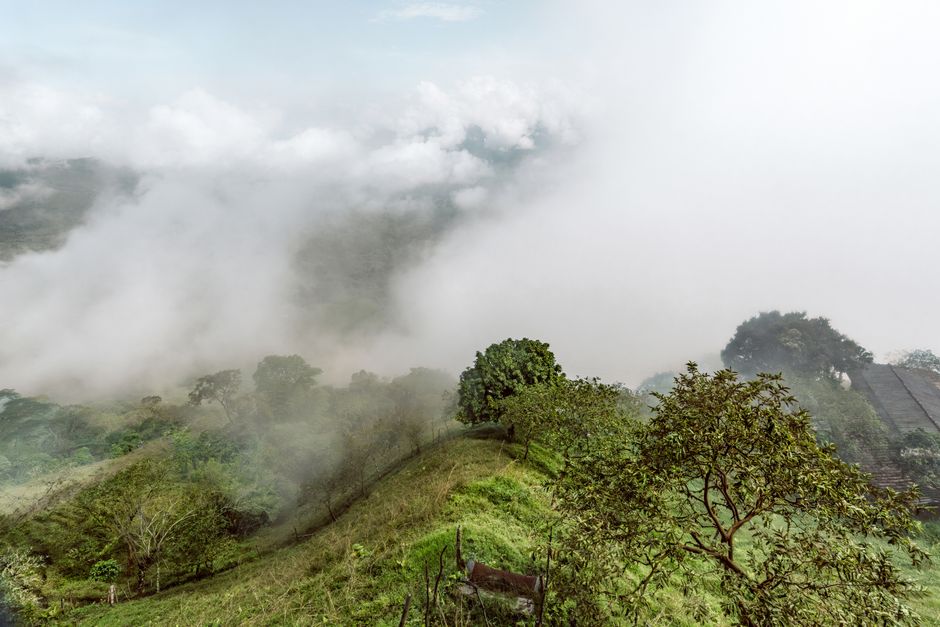
The Western Andes: Where Andes Meets Chocó
The Western Andes range is unique because it sits at the confluence of two of the world's most biodiverse biomes. The Chocó bioregion, located in the Pacific lowlands of western Colombia and northwestern Ecuador, is one of the world's most biodiverse areas. Its tropical rainforests are teeming with life, and the region boasts an exceptionally high level of endemism, with many species found nowhere else.
A strategically located lodge in Valle del Cauca gives access to both Andean cloud forest specialists and Chocó lowland endemics within a single day's driving range. That dual-ecosystem accessibility is what makes the Western Andes the single most efficient birding region in Colombia.
Cloud Forest Conservation Status — Why It Matters for Your Trip
I've found that many birders underestimate how critical the conservation status of the surrounding habitat is to their trip experience. A lodge surrounded by degraded pasture or coffee monoculture will produce a fraction of the species variety of one embedded in intact or actively recovering forest.
Colombia's cloud forests are home to a myriad of endemic species, including over 300 bird species, 183 mammal species, and 3,000 plant species. However, they are under threat from deforestation and agricultural expansion, leading to significant habitat fragmentation. This fragmentation makes protected reserves — and the lodges that work with them — even more critical as refuge points for species that have nowhere else to go.
When birds generate income, habitats gain value. Researchers and environmental organizations increasingly view bird tourism as a sustainable development model. Therefore, every night you spend at a conservation-focused birding lodge is a direct conservation act — not just a vacation.
Yotoco Lodge: A Strategic Base in Valle del Cauca

Why Yotoco Is One of Colombia's Most Important Cloud Forest Fragments
In my experience exploring the Western Andes, the San Antonio Forest, where Yotoco Lodge is Located, is one of the most strategically vital birding positions in all of Colombia. The San Antonio Forest is one of the best-protected cloud forest patches on the western mountain range, which has become an important refuge for various species of fauna and flora in Valle del Cauca.
Also the surrounding region of Buga and the Cauca Valley places visitors at the nexus of multiple priority habitats: cloud forest, dry forest, and the Sonso Lagoon wetlands — one of the most species-rich wetland complexes in Colombia.
Yotoco Lodge is positioned to take full advantage of this extraordinary ecological context. The Lodge is located in the middle of many birding hotspots LIke La Florida, San Felipe and Bosque de Niebla at KM. 18, Doña Dora, Atuncela, San Cipriano , Carrizales Yotoco Natural Reserve, Sonso Lagoon, Calima Lake, and Rio Bravo Reserve. This is a rare confluence that few lodges anywhere in Colombia can match.
Target Species at Yotoco
At Yotoco Forest Reserve, it is possible to see the endemics: Colombian Chachalaca, Grayish Piculet and even Apical Flycatcher at feeders, other species as Crimson Rumped Toucanet, Whiskered wren, Plain Antvireo, Inca Jay Red Headed Barbet, Black-capped Tanager, Scrub Tanager, Golden-napped Tanager, Metallic-green Tanager and many more.
The area is home to more than 620 bird species, including 16 endemic to Colombia, seven of which are exclusive to the Cordillera Occidental. For a birder building a Colombian endemic list, this is an extraordinary density in a relatively compact geographic area.
The Broader Valle del Cauca Birding Circuit from Yotoco Lodge
What elevates Yotoco Lodge above a single-reserve destination is its position at the center of a rich multi-habitat circuit:
-
Yotoco Natural Reserve — Cloud forest endemics, Cauca Guan, Colombian Chachalaca
-
Doña Dora- Pacific Claoud Forest endemics, Toucan Barbet, Glistenning-green Tanager
-
Km 18 La Florida - CLoud Forest western Andes endemics Multicolored Tanager
-
Laguna de Sonso — One of Colombia's premier wetland birding sites; birders at Laguna Sonso, a wetland formed by the slow meander of the Cauca River, have recorded nearly 400 species
-
Calima Lake area — Aquatic species, migratory waterbirds, herons, and ibis
-
Rio Bravo Reserve — Subtropical humid forest with Chocó-influenced species
This ranges from the Pacific coast, the Chocó forest, and the Western Andean mountain range ecosystems — all accessible from a single comfortable base. Therefore, rather than driving between multiple lodges, many birders find that Yotoco Lodge provides the geographic anchor for exploring the entire Cauca Valley birding landscape.
The Western Andes Birding Lodge Landscape: A Regional Overview
Araucana Lodge — Luxury and Endemic Access Near Cali
For those who want the most luxurious base in the Western Andes, Araucana Lodge is the benchmark. In terms of comfort and luxury, it's unbeatable for Colombia. There may be lodges with a bigger bird list, but there's nowhere that so perfectly combines excellent birding with comfort, luxury, and immaculate attention to detail.
Araucana Lodge is located 40-minute drive from Cali on the way to Bitaco and Lomitas, in Dagua municipality of the Department of Valle del Cauca. 17 species of hummingbirds and up to 30 species of colorful tanagers arrive to the house's gardens and feeders. The main attraction is the presence of five endemic and near-endemic species: Multicolored Tanager.
What I've found about Araucana is that its true value lies not just in on-property birding but in its geographic centrality. The location plays a big part in Araucana's popularity with birders. Cali is just an hour away, and the paradise birding sites at KM 18 can be reached in 15 minutes. Doña Dora's house on the old road to the Pacific is also an hour by road, while the lowland Pacific jungle paradise of San Cipriano is 90 minutes away.
Pro Tip: Araucana books up months in advance for December–February dry season. If you're targeting this window, reach out at least 4 months ahead. An alternative base like Yotoco Lodge offers comparable access to the broader Valle del Cauca circuit with fewer availability constraints.
Montezuma Rainforest Ecolodge — The Chocó Endemic Heartland
For serious endemic chasers, the Montezuma Road corridor is non-negotiable. Birding along Montezuma Road in Risaralda, Colombia, is a paradise for birders. It is located in the humid cloud forest of the Chocó slope in the Western Andes. The road leads to the top of Montezuma Hill, which is part of the buffer zone of Tatamá National Park. This area is home to over 500 bird species, including many endemics to Colombia, such as Gold-ringed and Black-and-gold Tanagers.
Tatamá National Park encompasses 51,900 hectares of primary tropical and subtropical rainforest of the Western Andes, temperate cloud forest and páramo habitat, and is a source of water for rivers in all directions. It is home to more than 550 species of birds, 450 species of orchids and 700 species of butterflies. Therefore, a visit to Montezuma is not a single-day birding excursion — it deserves at least 2–3 full days to properly work the different elevational zones of the road.
Río Blanco Reserve and Hacienda El Bosque — Central Andes Power Combo
North of Valle del Cauca, the Central Andes offer a completely different suite of species. Just outside Manizales lies Río Blanco Natural Reserve, widely considered one of the best places in the world to see and photograph antpittas. This protected cloud forest reserve sits between roughly 2,200–3,700 meters in elevation and is home to more than 300 bird species.
High in the cloud forests above Manizales lies one of the most beloved birding lodges in the Colombian Andes: Hacienda El Bosque. Located at roughly 2,800 meters (9,200 feet) in elevation on the road toward Los Nevados National Natural Park, this historic property has become one of the premier bird photography destinations in the region.
What makes the Manizales area particularly valuable is the connectivity between reserves. Above the cloud forests surrounding Manizales, the road climbs into the dramatic alpine landscapes of Los Nevados National Natural Park, reaching elevations of 3,500–4,200 meters. Here the forest gives way to windswept páramo ecosystems, one of the most unique habitats in South America. A well-planned itinerary can move from cloud forest antpittas in the morning to páramo hummingbirds in the afternoon — an elevational gradient that no other country can match so efficiently.
El Dorado Lodge (Sierra Nevada) — Maximum Endemic Density
For the most endemic-rich single site in Colombia, the Sierra Nevada de Santa Marta is the answer. El Dorado Lodge, the flagship reserve of ProAves — Colombia's main bird conservation group — is located high in the endemic-rich coastal mountains of the Sierra Nevada de Santa Marta and is justifiably touted as one of the best birding lodges in Colombia.
This reserve, set between 950–2700 m above sea level on the Santa Marta Mountains, offers the highest concentration of endemic birds per area in South America. On just 3 days you can see 16–22 endemic birds and many others who are only shared with Venezuela. This is the correct starting point for any trip specifically targeting endemics above all else — therefore include it as a dedicated 3-night block rather than a day trip.

What Separates a Great Birding Lodge from a Good Hotel Near Birds
The Infrastructure Checklist
After years of birding in Colombia's cloud forests, I've developed a clear sense of what infrastructure actually changes your results in the field. Specialized services as bird libraries, local guides with complete knowledge of the local bird life, and complete bird lists of the place are table stakes for any serious birding lodge. Beyond these basics, the differentiating features include:
Hummingbird feeders and fruit feeders: These are not merely tourist entertainment — they are critical research and observation tools. The fruit and hummingbird feeders are jam-packed with tanagers and hummingbirds and even host less common feeder birds like Green Jay and Lineated Woodpecker. Any birder could happily spend a few hours observing those feeders, and most would pick up a few lifers in the process.
Proximity to multiple habitat types: The best lodges position themselves at ecotones — transition zones between habitats. Yotoco Lodge](https://yotocolodge.com) is located in the middle of 4 birding hotspots where the Andes and the Biogeographic Chocó converge. This multi-habitat positioning is what drives high species counts without long daily travel times.
Photography hides and observation towers: It is necessary the presence of observation towers, canopy roads, and well-demarcated trails with good viewing angles and easy access. This is what defines a specialized lodge for birders.
Food, Comfort, and the Early Birder Culture
The best birding lodges in Colombia share a common operational philosophy: the kitchen opens before the birds do. Restaurant service starts at 5:30 am at top-tier properties — a detail that sounds minor until you realize that dawn birding in Colombian cloud forest is often the difference between 60 and 100 species in a single morning.
Farm-to-table cuisine also signals something important about a lodge's broader philosophy. One thing especially loved about Araucana was their farm-to-table philosophy. Lodges that grow their own food tend to maintain more natural, wildlife-friendly grounds — which means more birds naturally attracted to the property itself.
Pro Tip: When evaluating a birding lodge, ask specifically: "What time does the kitchen open?" and "Do you have a bird list for the property?" Any serious lodge will answer both questions immediately. If they hesitate on either, reconsider.
Conservation Commitment as a Quality Signal
In my experience, the most reliable birding lodges are those that have made a formal commitment to conservation. This manifests in practical ways: maintaining forested corridors, avoiding pesticides, hiring local guides, and reinvesting a portion of revenue into reserve management.
Birdwatching tourism in Colombia is helping reshape attitudes toward conservation. Historically, many rural communities had limited economic alternatives. Protecting forests often seemed financially impossible. But ecotourism changes the equation. Yotoco Lodge embodies this model — its position adjacent to the Yotoco Forest Reserve means that healthy occupancy rates directly support the economic viability of keeping that cloud forest intact.
By staying in family-run lodges, hiring local birdwatching guides, and supporting conservation areas, you're helping preserve the very habitats that make Colombia so rich. It's a win for nature and for the communities that protect it.
Planning Your Western Andes Birding Trip: Practical Strategy
Best Seasons and Weather Patterns
Colombia's equatorial position means year-round birding is genuinely viable, but seasonal patterns affect accessibility and cloud cover. During the summer, luminous blue skies can be seen (June–August, December–February). These two dry windows are the prime booking periods and fill up fastest.
The weather can be unpredictable during the rainy season (February to June) and there is a lot of cloud cover. This does not mean poor birding — in fact, many endemic species are most active in misty conditions — but trails can be more challenging and some remote lodges may become temporarily inaccessible by road.
Pro Tip: December through February is the single best window for combining maximum species diversity with comfortable weather in the Western Andes. It aligns with peak North American winter when many migratory warblers are also present. Colombia has hundreds of bird species that live in the equatorial region, but it also has hundreds more that migrate north from South America May–September and south from Central or North America September–April.
Building Your Itinerary Around the Valley del Cauca Hub
Valle del Cauca, with Cali as its gateway, is the most efficient starting point for a Western Andes cloud forest birding trip. Valle del Cauca is fast becoming one of the most popular birding destinations in Colombia. Access through Cali's international airport is easy, infrastructure is generally good, and an astounding array of tropical birds can be found within a half-day's drive of that gateway city.
A practical 15-day itinerary from Yotoco Lodge as home base:
-Day 1: Cali Airport pick up & Transfer to Yotoco Lodge
-Day 2: Yotoco Lodge – San Antonio Forest (Ebird List)
-Day 3: San Cipriano (Ebird List)
-Day 4: Doña Dora / El Descanso (Ebird List)
-Day 5: Finca La Florida (18 km) (Ebird List)
-Day 6: Atuncela Dry Forest Enclave (Ebird List)
-Day 7: Rio Bravo (Ebird List)
-Day 8: Suee Birding (Ebird List)
-Day 9: Sonso Lagoon (Ebird List)
-Day 10: Mirador de Buenos Aires (Ebird List)
-Day 11: El Diamante & Curigua (Ebird list El Diamante , Ebird list Curigua)
-Day 12-13-14: Reserva San Jose and surroundings (Ebird List)
-Day 15: Airport drop off .
What to Pack: The Essential Checklist
-
Optics: 8x42 or 10x42 binoculars (10x is preferred in dense cloud forest for longer sightlines). A spotting scope is useful for open-habitat species at feeders.
-
Field guide: Fundación ProAves' Birds of Colombia field guide or the Merlin Bird ID app (offline Colombia pack essential)
-
Clothing: Lightweight moisture-wicking layers. Cloud forest temperatures average 18–22°C but can drop to 12–14°C at higher elevations. A quality rain jacket is mandatory.
-
Footwear: Waterproof trail boots — trails in cloud forest reserves are often wet year-round
-
Camera: If photography is a goal, a 500mm+ telephoto lens and fast memory cards will serve you better than any other single upgrade
Pro Tip: Download the eBird app before you leave home and create an account. Many Colombian guides use eBird in real time, and your observations contribute directly to the scientific database that supports conservation planning for the birds you're seeing.

Common Mistakes to Avoid When Booking Birding Lodges in Colombia
Mistake 1: Choosing Location Over Habitat Quality
Many travelers see "near Cali" or "easy airport access" and assume that convenience equals quality. In reality, the most accessible location in the valley may sit in degraded agricultural land with little native forest. Always ask a prospective lodge: "What percentage of your surrounding land is forested or under conservation management?" A lodge within or adjacent to a formal reserve — like Yotoco Lodge near theSan Antonio Forest — gives you a fundamentally different birding experience than a comfortable hotel on the edge of a city.
Mistake 2: Underestimating Elevational Gradient
A Colombia birding tour through the Western and Central Andes is designed to follow a natural progression of habitats and elevations — one of the key factors behind the country's extraordinary bird diversity. By moving from the humid Chocó region on the Pacific slope to the high Andes and páramo ecosystems, the itinerary allows for a continuous change in bird communities, resulting in a rich and dynamic experience. Many first-time visitors miss this entirely, staying at a single elevation and wondering why they're not seeing more species. Plan deliberate elevational moves — even within a single day.
Mistake 3: Skipping Local Expert Guides
To really experience each place and optimize your chance of identifying a bird, make sure to go with a local naturalist, biologist, or tour guide who works closely with local experts. In Colombia's cloud forests, where species are often heard before they're seen, a guide who knows the local soundscape is not a luxury — it's the single biggest multiplier on your trip list. The best guides at properties near Yotoco Lodge know specific foraging routes of endemic species down to the time of day.

Mistake 4: Not Booking Far Enough in Advance
Birdwatching tourism in Colombia is becoming one of the country's fastest-growing niche travel industries. This growth is real, and its effect on premium lodge availability is significant. The top-tier ecolodges in Valle del Cauca and the Western Andes regularly book out 3–6 months in advance for peak season windows. If you're planning a December or January trip, have your accommodation confirmed by September at the latest.
The Bigger Picture: How Birding Tourism Saves Colombia's Cloud Forests
Birds as Economic Infrastructure
The connection between birding tourism and forest conservation is not theoretical. With the highest number of bird species of any country, including 443 rare species highly valued by bird-watchers, Colombia has a unique opportunity to develop a lucrative and conservation-friendly bird-watching tourism industry in postconflict areas.
It is estimated that over $800 billion is spent a year in outdoor recreation in the United States, with birdwatching having an economic benefit of $41 billion dollars. Roughly $17.3 billion is spent annually in wildlife-watching trip-related expenses in the U.S., with more than 20 million Americans taking birding-specific trips. A meaningful portion of those dedicated birders are now choosing Colombia as their primary international destination — and their expenditure funds local guides, reserves, and infrastructure.

Frequently Asked Questions
What makes the Western Andes cloud forest different from other Colombian birding regions?
The Tropical Andes region is a biodiversity hotspot described as a "Global Epicenter of Biodiversity" by the Critical Ecosystem Partnership Fund. Unlike the Amazon or the Caribbean coast, the Western Andes sits at the convergence of three major biomes — Andean cloud forest, Chocó Pacific lowlands, and Cauca Valley dry forest — making it possible to encounter radically different bird communities within an hour's drive. No other region in Colombia offers this level of habitat diversity at such a compact geographic scale.
How many bird species can I realistically expect to see in a 7-day Western Andes trip?
With a good local guide and strategic lodge placement, 200–300 species in 7 days is a realistic target in the Western Andes. Some expert-led tours report higher counts: one group logged 305 separate species of birds in 7 days based at a Western Andes lodge.
Is Colombia safe for international birding tourists in 2026?
As the perception of safety has changed, foreign visitors have begun pouring into Colombia with tourism growing an astounding 1200% between 2000 and 2024. In the last decade, the security situation has continued to improve because of the country's peace deal with the FARC guerrilla group, which has opened up new areas of the country to tourists. The birding regions most relevant to this guide — Valle del Cauca, Risaralda, and Caldas — are considered safe for international visitors. Always follow your lodge's guidance on local conditions and use their recommended guides rather than unvetted operators.
What is the best time of year to visit Yotoco Forest Reserve and the Western Andes?
The two dry windows — December through March and June through September — offer the most comfortable trail conditions and best visibility for photography. However, Colombia's cloud forests produce excellent birding year-round. Seasonality plays a role, but Colombia is truly a year-round birding destination. The "rainy season" in Colombia's cloud forest is a relative term — misty conditions are often ideal for bird activity, even if not ideal for photographers seeking sharp backgrounds.
What endemic species should I prioritize at Yotoco Lodge and Valle del Cauca?
The top target endemics in this region include the Cauca Guan, Colombian Chachalaca, Multicolored Tanager, Grayish Piculet, and Apical Flycatcher. The area is home to more than 620 bird species, including 16 endemic to Colombia, seven of which are exclusive to the Cordillera Occidental. Of these, the Cauca Guan is the most range-restricted and conservation-significant — a sighting at Yotoco Lodge contributes to citizen science data monitored by WCS Colombia.
Do I need prior birding experience to enjoy a stay at a cloud forest ecolodge?
Absolutely not. Travelers increasingly want authentic nature experiences instead of crowded tourist destinations. Smartphone technology has lowered the barrier to entry for birdwatching. You no longer need years of expertise to participate. The feeders at a well-run lodge like Yotoco Lodge deliver extraordinary close-up encounters with hummingbirds, tanagers, and Jays regardless of experience level. Beginners often find the feeder experience more rewarding than trail birding — the birds come to you.
How does staying at a birding ecolodge contribute to conservation?
Birdwatching creates economic incentives to preserve forests and habitats, helping local communities benefit financially from conservation. When you stay at a lodge adjacent to a formal reserve, you are part of the economic argument for keeping that forest standing. Economic inputs from high-paying visitors can be disproportionately impactful for local communities in rural areas bordering primary habitat. This virtuous cycle — visitor dollars funding conservation, conservation creating better birding, better birding attracting more visitors — is exactly the model that Colombia's best ecolodges are building.

Your Next Step
The Western Andes cloud forest is not a destination you can experience adequately in a weekend. The biodiversity is too layered, the elevational gradients too rewarding, and the endemic species too numerous. Plan a minimum of 7 days, base yourself strategically at a lodge embedded in or adjacent to a protected reserve, and engage a local expert guide from day one.
Yotoco Lodge stands out as one of the most strategically positioned options in the entire Valle del Cauca region — sitting at the convergence of four distinct birding hotspots, adjacent to one of the most important remaining cloud forest fragments in the Western Andes, and committed to the farm-to-table, conservation-integrated philosophy that defines Colombia's best birding ecolodges.
Colombia has been officially named "The Country of the Birds." The Western Andes is where that title is most fully justified. The only question left is: when do you go?
Sources
-
Best Birding Lodges in Colombia: Complete Guide by Region (2026) — Sula Colombia Wildlife & Nature Tours. Comprehensive regional guide to Colombia's top birding lodges.
-
Araucana Lodge: Colombia's Best Birding Lodge? — The Birders Show. In-depth review of Araucana Lodge in Valle del Cauca.
-
Colombia Birdwatching in the Western and Central Andes — Uncover Colombia. Detailed Western and Central Andes birding itinerary.
-
Birding Manizales, Colombia: Best Bird Photography Lodges in the Colombian Central Andes — Overland Uncharted. Reviews of Río Blanco, Hacienda El Bosque, and Los Nevados area lodges.
-
Colombia's Cloud Forests Imperiled by Climate Change, Development — Scientific American. Expert analysis of cloud forest biodiversity and conservation status.
-
Why Save Colombia's Cloud Forest? — Saving Nature (La Mesenia). Statistics on Western Andes biodiversity and endemic species.
-
Southwestern Andes Birding Trail — National Audubon Society. Official trail guide for Valle del Cauca and Cauca birding.
-
Economic and Conservation Potential of Bird-Watching Tourism in Postconflict Colombia — SAGE Journals / Tropical Conservation Science. Peer-reviewed study on birding tourism economics.
0 comments